Read the spaces between the bricks
The joints help give a wall its scale and texture. Learn to describe what you see without turning a glance into a diagnosis.
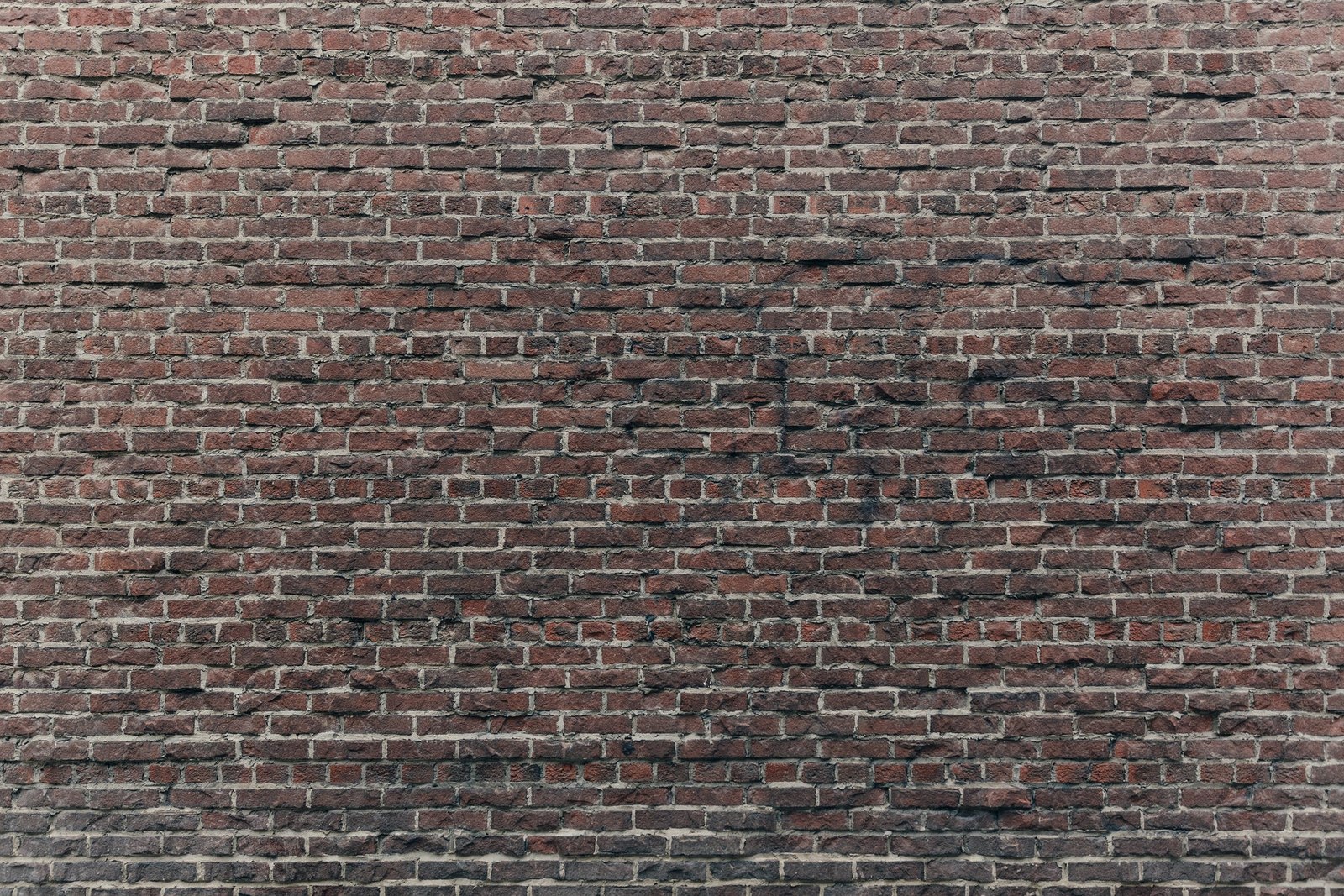
It is easy to describe a brick wall by the colour of its bricks. Stand a little closer, and the joints begin to organise the view. They outline individual units, establish the strength of the pattern and sometimes reveal changes that the larger composition conceals. Before calling a wall rough, neat, old or newly restored, look at the spaces between its bricks.
This is an exercise in visual literacy, not a method for diagnosing a building. A photograph or a short walk cannot tell you whether a mortar is appropriate, why a crack appeared or what repair is required. What careful looking can do is replace an impression with a set of observations and questions that are worth bringing to a knowledgeable person.
Let the joint become the foreground
Choose a small area that you can observe safely from an allowed public position. Notice whether the mortar appears flush with the brick faces, set back from them or shaped in some other visible way. Describe the effect on the pattern. Does each brick read as a separate object, or does the wall appear more continuous from a distance?
Move back and compare the view. A joint that seems prominent at close range may almost disappear from across the street. This change of scale matters when evaluating an image of a proposed finish. A close-up sample and a full building elevation ask the eye to do different things. Neither is a substitute for the other.
Look for a change before inventing a history
You may find a patch where the joint colour or profile differs. Mark its position relative to an opening, corner or visible alteration. Do not immediately decide that the patch proves a particular repair date, a poor workmanship standard or a hidden structural problem. Several explanations may be possible, and the evidence you need may lie in records or an inspection rather than on the surface.
The useful note is specific: the joint becomes lighter beside this opening, the visible depth changes above that line, or a local patch interrupts the surrounding pattern. Such descriptions preserve what another person could check. A dramatic conclusion without evidence makes the observation less useful, even when the conclusion later happens to be correct.
Understand why a repair is more than a colour match
The National Park Service's Standards for Rehabilitation emphasise the treatment and repair of historic features and the compatibility of replacement work. That broader principle is a useful corrective to choosing mortar by appearance alone. A wall is an assembly, and the visible finish is only part of a conservation decision.
If you are responsible for a building, separate the aesthetic brief from the technical assessment. You can express a preference about how strongly the joints should appear or which existing area seems visually representative. Those preferences still need to be considered alongside the masonry's condition, appropriate materials, previous work and the building's particular requirements. A small visual exercise should improve the professional conversation, not replace it.
Observe the edges of the units
The relationship between mortar and brick becomes clearer when you look at the edges rather than only the flat faces. Are the units visually regular or varied? Does the joint emphasise that variation? Are there obvious differences between one part of the wall and another? Avoid touching, scraping or testing the wall during an ordinary observation walk.
Strong sunlight can make a recessed joint look more pronounced because the small changes of surface become easier to see. Under different conditions, the same wall may appear flatter. Record the conditions rather than treating one photograph as an objective account of the colour and relief. This is particularly helpful when comparing two walls photographed at different times.
Make a small pattern study
Draw a few courses of masonry without trying to reproduce every irregularity. Mark the bond pattern you can actually see, then annotate the joint's appearance from close and distant positions. If the pattern changes around an opening, give that detail its own sketch. The point is to understand the organisation, not to produce a convincing drawing of a generic brick wall.
End with two questions rather than a verdict. One might concern why a local patch looks different; another might concern which existing area should guide any proposed visual match. Those questions acknowledge both the wall's character and the limits of looking. Once you notice the joints, brickwork becomes less like a flat colour choice and more like a carefully assembled surface with a history that still needs to be established.
Sources & further reading
-
The Secretary of the Interior's Standards for Rehabilitation - Historic
Preservation Tax Incentives (U.S. National Park Service) ↗
Background: U.S. rehabilitation standards on retaining historic materials, repair and changes that preserve future integrity. Not a diagnosis or a universal rule for new buildings.