A material palette needs a reason
Move past the beautiful sample board. Give each surface a job, a proportion and a place where it meets something else.
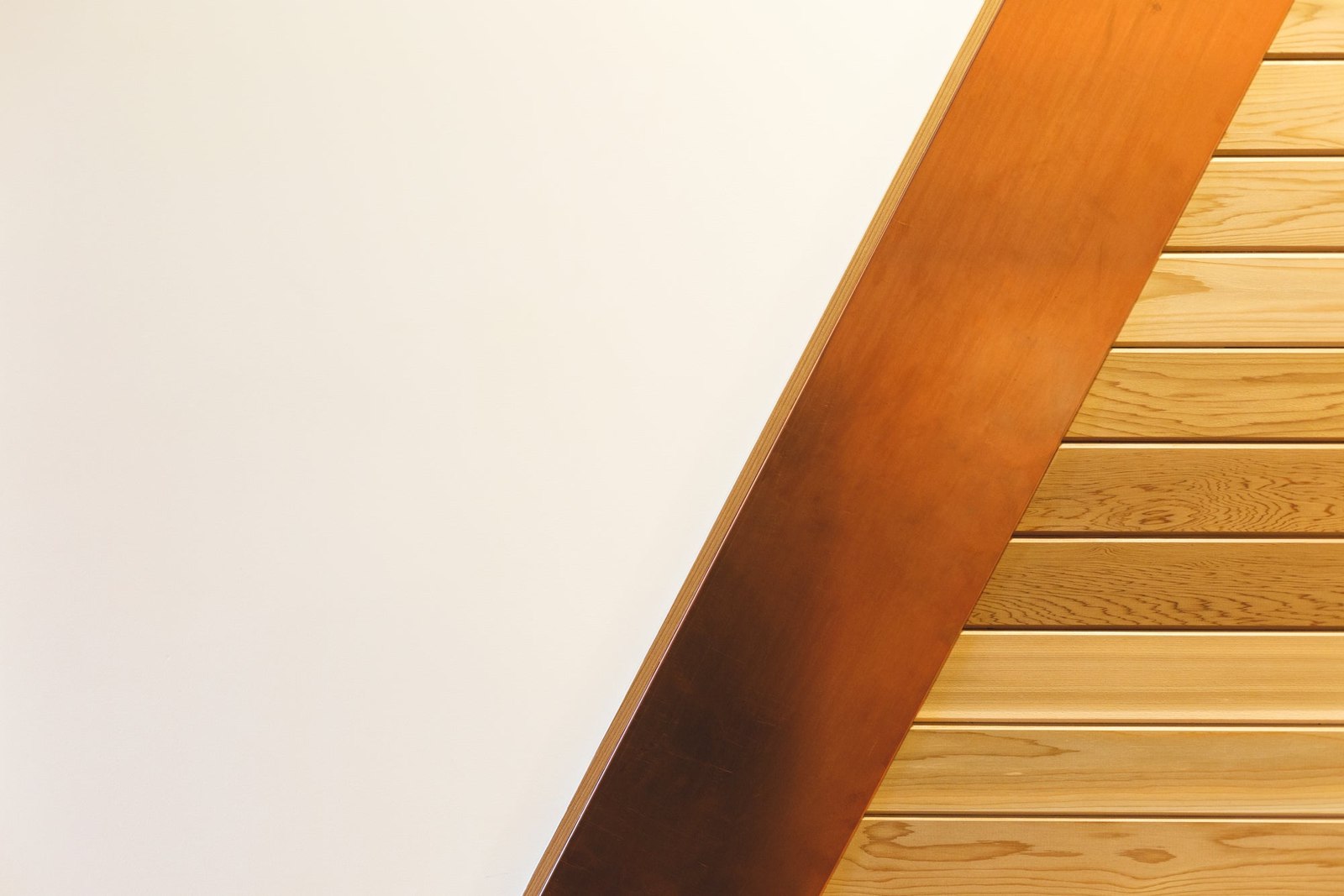
A restrained material palette is not simply a short shopping list. Two materials can create a busy room if their edges, finishes and changes of scale compete for attention. Several materials can feel coherent when each has a clear role. Before reducing a proposal to three attractive samples, decide what those materials are being asked to do.
This is especially useful when a room is being planned through photographs and online listings. A sample seen alone has no neighbours, no corners and no regular contact with hands or feet. The finished room has all of those things. Thinking about roles, proportions and junctions can make a palette more convincing before a purchase fixes it in place.
Assign a job to each surface
List the main surfaces in the room: floor, walls, ceiling, worktop, table, storage fronts and any prominent frame or opening. For each, write a practical and visual job. A floor might need to support daily movement while remaining a quiet background. A table might be the part you touch most often and the object around which several activities gather.
Do not give every surface the same ambition. If all of them are meant to be the room's feature, the word feature stops helping. Equally, a background does not need to be blank or characterless. It needs to perform its part without demanding attention that belongs somewhere else. This role-based description is more useful than asking whether each sample is beautiful in isolation.
Compare proportions, not equal squares
Lay the samples out in rough proportion to the surfaces they represent. A wall covering should not occupy the same visual area as a small handle simply because the supplied samples happen to be the same size. You can use photographs, paper and written labels when physical samples are unavailable, while remembering that screens cannot establish a finished material's exact appearance.
Now stand back. Which surface dominates? Which acts as a link between other parts? Which introduces a contrast that needs a reason? A material that feels pleasantly distinctive as a small swatch may become more forceful across an entire floor. The exercise does not predict the finished room exactly. It reveals whether the intended hierarchy exists at all.
Draw one difficult meeting
Choose a junction that the inspiration images do not explain: floor to threshold, worktop to wall, shelf to cabinet, or an existing frame beside a new finish. Sketch the meeting at a larger scale. Will one material overlap the other, stop short or be separated by another piece? Who will need to resolve the detail?
This question often exposes a hidden material in an apparently simple palette. A trim, seal, fixing or edge treatment may be unavoidable. Rather than pretending those elements do not exist, include them in the discussion. A restrained result depends as much on a few well-considered meetings as on the number of products in the specification.
Include touch and care in the brief
Think about how the surfaces will be encountered. A broad wall is often seen from a distance; a drawer front, rail or table edge may be touched repeatedly. A surface near water, cooking or outdoor footwear has a different everyday context from one in a sheltered reading corner. Ask the supplier about intended use, cleaning, installation and maintenance rather than deriving those properties from appearance.
If an existing building has historic features, material decisions may also require a conservation approach. The National Park Service's rehabilitation standards provide useful background on retaining character-defining features and considering compatible changes. They do not turn a new sample board into permission to remove an existing surface.
Leave one thing undecided
It can be useful to postpone a small choice until the larger relationships are clearer. A movable textile or lamp is easier to reconsider than a fixed floor. Distinguish what must be resolved for the work to proceed from what can be chosen after you have lived with the main surfaces. Restraint can mean reducing the number of premature decisions as well as reducing the number of materials.
The final palette should be explainable in ordinary sentences. This surface provides continuity; that one accepts daily contact; this contrast identifies a particular activity. If the only explanation is that the samples looked good together, return to the room. A palette becomes architectural when its parts have a scale, a meeting and a reason to be there.
Sources & further reading
-
The Secretary of the Interior's Standards for Rehabilitation - Historic
Preservation Tax Incentives (U.S. National Park Service) ↗
Background: U.S. rehabilitation standards on retaining historic materials, repair and changes that preserve future integrity. Not a diagnosis or a universal rule for new buildings.