The small room around a window
A window has depth as well as a view. Reading its reveal brings a neglected architectural detail into focus.
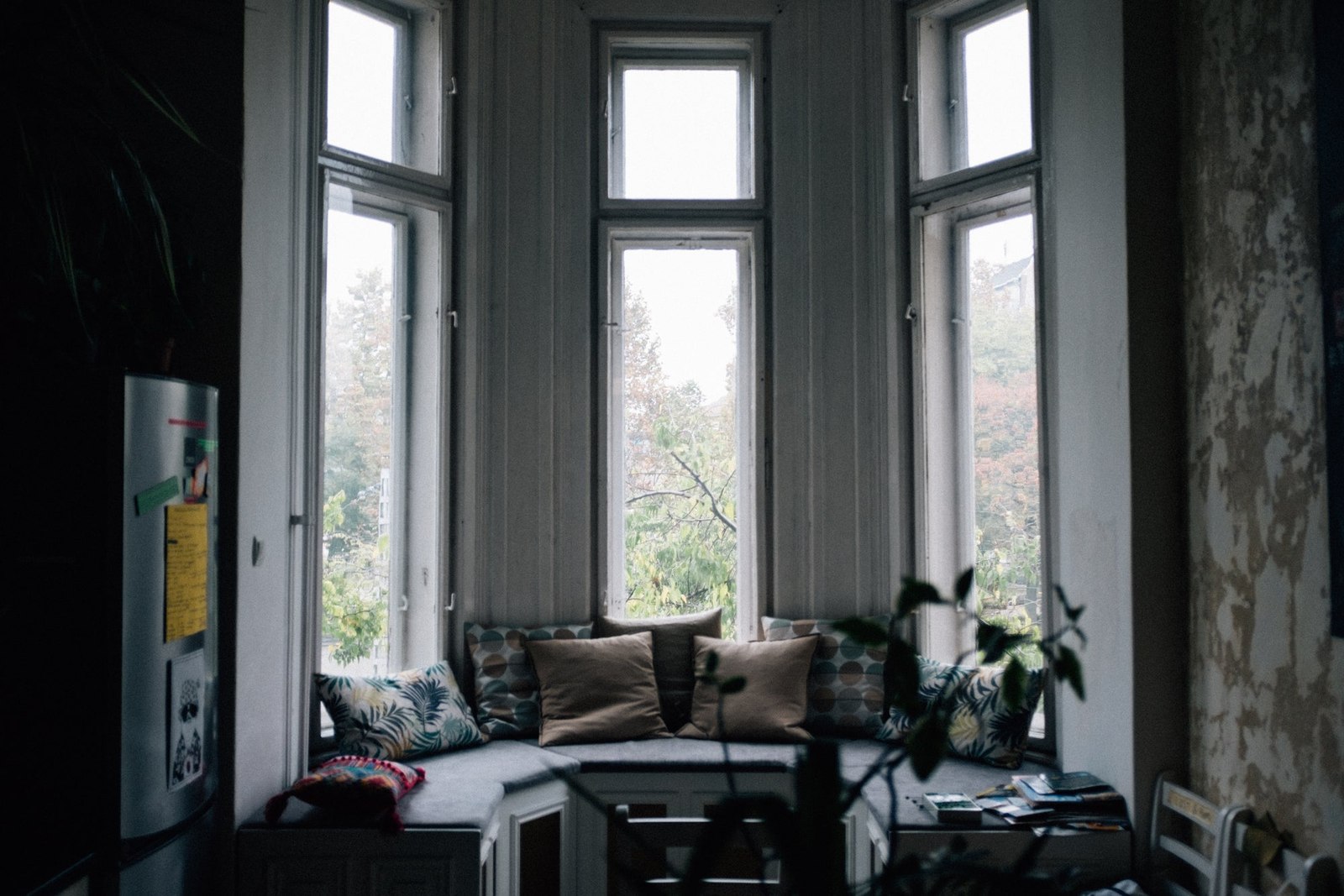
Between the face of a wall and the glass of a window there may be a depth of surface: the reveal. In some buildings it is barely noticeable. In others it frames the outside world like a small chamber. Looking at that depth can change how you understand a window. It is not simply a rectangle through which light enters. It is also a transition between a room and what lies beyond it.
You can study a reveal without identifying the building's style or knowing when it was made. Begin with what you can see: the direction of its surfaces, the place where the frame sits and the relationship between the sill and the room. Avoid turning a visual impression into a conclusion about construction, thermal performance or the wall's hidden layers.
Approach from the side
Face the window directly, then move gradually to one side. Notice how much of the outside remains visible and how the wall begins to overlap the view. A deeper opening may make the outside scene appear more deliberately framed from certain positions. From another position, the same depth may hide part of the view. Neither observation establishes whether the window is good or bad. It describes who can see what, from where.
This matters when placing furniture. A chair aligned with the centre of a window may have a very different view from a chair beside it. Before choosing a position from a floor plan alone, sit or stand at the likely location and look outward. You may discover that a small move changes which part of the street, garden or sky belongs to the room.
Look at the surfaces around the glass
Describe the top, sides and bottom of the opening separately. Are they the same material as the main wall? Does the sill project into the room or stop within the opening? Is there a visible change in finish near the frame? Such details can give a window a sense of weight, delicacy or continuity, but your description should explain the visible cause instead of relying on those adjectives alone.
A pale surface, a dark lining and a textured surround will present different appearances under changing light. Observe the actual arrangement rather than assuming that a colour sample predicts the result. The angle of the surface and the view behind it are part of the composition. A photograph taken straight towards the window may conceal precisely the detail you are trying to understand.
Ask whether the depth is occupied
An internal sill may hold a plant, a book or nothing at all. What matters is whether its everyday use supports the room. An attractive object can also obstruct a handle, interfere with a covering or make cleaning awkward. Keep these practical relationships visible when considering how a deep reveal might be used.
Do not assume that a broad sill is designed to support a person. A detail that resembles a seat is not evidence of its load capacity or safe use. If seating is part of a proposal, it needs appropriate design and verification. For an observation exercise, it is enough to record the temptation: the opening looks habitable, and that appearance changes how the room is perceived.
Include the covering in the picture
Curtains, blinds and shutters can sit within the opening, beyond it or across a larger part of the wall. Their position changes how much of the reveal remains visible and how the edge of the window is understood. Consider the open and closed conditions. A covering that looks discreet when open may become the dominant surface when closed.
Think of a window covering as something that moves, rather than another fixed surface in the photograph. Can it be reached, does it clear nearby furniture, and does its normal position suit the activities taking place? Appearance and operation should be considered together, including where the fabric or panels go when the opening is uncovered.
Draw the window as a short passage
A simple section can be more revealing than another front-facing photograph. Draw the room surface, the depth of the opening, the frame and the outside beyond it. Add the position from which the window is normally seen. You do not need a technically complete drawing to make the relationship easier to discuss.
The reveal's small distance may organise a surprisingly large part of the room's experience. It can make a view feel near or removed, turn an ordinary opening into a resting point for the eye, or explain why one chair has become a favourite. Looking at that distance is a way of noticing architecture at the scale of everyday attention.